Skip navigation

A trial comparing radiotherapy and surgery for women with breast cancer which has spread to their lymph nodes (Amaros)

Please note this trial is no longer recruiting patients.

This trial is comparing surgery with radiotherapy as a treatment for women with breast cancer that has spread to the lymph nodes.

As part of breast cancer treatment, doctors often remove some, or all of the lymph nodes under the arm, to find out whether the breast cancer has spread to these lymph nodes.

The first lymph node that cancer cells in lymphatic fluid reach is known as the sentinel node. In this trial the doctors will remove the sentinel node and check it for cancer cells. This is called sentinel node biopsy.

If you have cancer cells in your sentinel node, you will need further treatment to the lymph nodes. This reduces the risk that the breast cancer will come back. Doctors know that radiotherapy and surgery are both good treatments for cancer cells in the lymph nodes under the arm. But both the treatments have some side effects.

The aims of this trial are to

  • Find out which treatment is better at stopping breast cancer from coming back
  • Compare the side effects of the two treatments
  • Compare the cost of the two treatments

Recruitment

Start 02/01/2007
End 01/05/2010

Phase

Phase 3

Who can enter

You can enter this trial if

  • You have a single breast cancer lump that is more than 5mm and less than 50 mm across, OR you have more than one lump in the same area of your breast - your doctor can tell you more about this (you may be able to take part if you have cancer in each breast)
  • The doctors did not find any enlarged lymph nodes under your arms when they examined you
  • You are well enough to have any of the trial treatments

You cannot enter this trial if you

Trial design

This is a randomised trial. You will be put into one of the two treatment groups by a computer. Neither you nor your doctor will be able to decide which group you are in. You will be told which group you are in before you have your sentinel node biopsy.

Everyone taking part will have a sentinel node biopsy. If the sentinel node does not contain cancer cells then you won’t need any more treatment to your lymph nodes. If you have cancer cells in your sentinel lymph node you will have been randomised to 1 of 2 treatment groups.

If you are in group1, you will have an operation to remove all the lymph glands from under your arm (axillary clearance). You will come back to hospital to have this operation at a later date. If you need to have chemotherapy as part of your breast cancer treatment, you will have this after the operation to remove your lymph nodes.

If you are in group 2, you will have radiotherapy to the armpit to kill off the remaining cancer cells. You will have radiotherapy 5 days a week for 5 weeks. If you need to have chemotherapy as part of your breast cancer treatment, you will have the radiotherapy after you have finished your chemotherapy.

Everyone taking part will fill in a questionnaire before the sentinel node biopsy. If, after your sentinel node biopsy, you need to have treatment to your lymph nodes, you will fill in this questionnaire again 1, 2, 3 and 5 years after treatment. The questionnaire will ask you how you are feeling and what side effects you are having. It is called a quality of life questionnaire.

Hospital visits

You will go to the hospital to have some tests before you take part in the trial. These include

  • Physical examination
  • Mammogram of both breasts

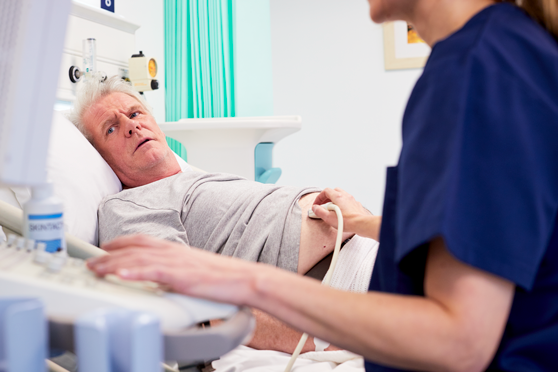
You may also have an ultrasound of your breasts and the lymph nodes under your arm.

After the treatment, everyone taking part will see the trial doctors at least once a year for 5 years. You may see the doctors more often than this, depending on the usual practice at your hospital. You will have a physical examination and a mammogram at each visit. If you had treatment to your lymph nodes, the doctors will check how well you can move your arm after 1, 3 and 5 years.

Side effects

The radioactive injection used for sentinel node biopsy, contains a very small amount of radioactivity. There are no known risks from having this injection, although some patients have had an allergic reaction to the blue dye.

A sentinel lymph node biopsy has possible side effects. These are

  • Infection
  • A collection of fluid around the biopsy site, called a seroma

If you have surgery to remove more lymph nodes, the possible side effects are

  • Infection
  • Pain
  • A restriction of arm movement
  • A collection of fluid around the operation site (a seroma)
  • Swelling of the arm (lymphoedema)

If you have radiotherapy to treat your lymph nodes, the possible side effects are

  • Redness and soreness of the skin
  • Tiredness
  • Swelling of the arm (lymphoedema)

Location of trial

CLOSED

For more information

The Information Nurses
Cancer Research UK
Angel Building
407 St John Street
London
EC1V 4AD

Tel: 0808 800 4040
Email: cancer.info@cancer.org.uk

Please note: we cannot help you to join a specific trial. Unless we state otherwise in this trial summary, you must go through your own doctor.

Chief Investigator

Professor Robert Mansel

Supported by

European Organisation for Research and Treatment of Cancer (EORTC)
National Cancer Research Network (NCRN)