Chemotherapy for melanoma
This page tells you about chemotherapy for melanoma skin cancer. There is information about
Chemotherapy for melanoma
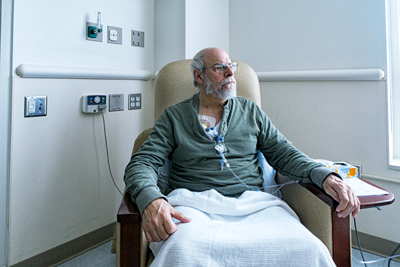
Chemotherapy uses anti-cancer drugs to destroy cancer cells. You may have chemotherapy as a treatment
- For a local recurrence (melanoma that has come back near to where it started)
- For an advanced melanoma that has spread to another part of the body
- To try to stop your melanoma coming back if you had cancer cells in your lymph nodes when the melanoma was removed.
You can have one chemotherapy drug or a combination of several drugs. You usually have injections or tablets for a few days. Then you will have 3 or 4 weeks without any drugs. Then another few days of drugs. This cycle is usually repeated six or more times to make up a complete course of chemotherapy.
Side effects
Different drugs have different side effects. And some people react more than others. Some common side effects of chemotherapy include a drop in the number of blood cells, feeling sick, diarrhoea, hair loss or thinning, sore mouth, feeling tired, and loss of fertility.
Regional limb perfusion
This is a way of having chemotherapy just into one arm or leg, without the drugs circulating through the rest of the body.
You can view and print the quick guides for all the pages in the Treating melanoma section.
Chemotherapy uses anti cancer (cytotoxic) drugs to destroy cancer cells. They work by disrupting the growth of cancer cells. The drugs circulate in the bloodstream around the body.
You may have chemotherapy
- As a treatment for local recurrence (melanoma that has come back near to where it started)
- As a treatment for advanced melanoma that has spread to another part of the body
Or you may have chemotherapy as an adjuvant treatment - to try to stop your melanoma coming back if cancer cells were found in your lymph nodes when the melanoma was removed. It hasn't yet been proved that it helps prevent melanoma from coming back. So you should have your chemotherapy as part of a clinical trial. There is more about taking part in a clinical trial in CancerHelp UK.
You can have chemotherapy for melanoma
- As tablets or capsules that you swallow
- As a liquid into a vein
- Into one arm or leg as regional limb perfusion
You may have one chemotherapy drug or a combination of several drugs. You usually have your injections or tablets for a few days. Then you have 3 or 4 weeks without any drugs. Then another few days of drugs. This cycle is usually repeated 6 or more times to make up a complete course of chemotherapy.
The drug most commonly used to treat advanced melanoma is called dacarbazine (DTIC). Sometimes it is used with other chemotherapy drugs, such as carmustine (BCNU), vinblastine, or cisplatin. These drugs may be given with the hormonal therapy drug tamoxifen. Another chemotherapy drug, temozolomide (Temodal), is taken as capsules and is used in research trials for melanoma.
Chemotherapy drugs may sometimes be combined with biological therapy drugs, such as interferon or interleukin.
Chemotherapy does have side effects. The side effects you have depend on
- Which drugs you are given
- How much of each drug you are given
- How you individually react to the drugs
Not everyone gets every side effect with every drug. Some people have more side effects than others. And different drugs have different side effects. So we can't tell you exactly what will happen to you. But here is a list of some common side effects
- A drop in the number of blood cells
- Feeling sick
- Diarrhoea
- Hair loss or thinning
- Sore mouth and mouth ulcers
- Feeling tired and run down
- Loss of fertility
The links above take you to information on coping with the side effects. You can also look at our section on chemotherapy side effects for general information. You can ask your doctor or nurse which of these side effects are most common with the chemotherapy drugs you will have. Or look at our general cancer organisations list for other sources of information about chemotherapy.
If you are having several different drugs, you may find the side effects difficult to cope with. But there is quite a bit that can be done to help. And most side effects only last for the few days that you actually have the drugs. Tell your doctor, nurse or pharmacist about any side effects as soon as they develop so that they can help you as much as possible.
You may get very tired towards the end of your course of treatment. The side effects will gradually go once your treatment has ended, but it will take you a while to get your energy back.
This is a way of having chemotherapy just into one arm or leg, without the drugs circulating through the rest of your body. Doctors only use it if your melanoma has come back in an arm of leg very near to where it started (a local recurrence).
This type of treatment was first used 25 years ago. Clinical trials are still going on with new combinations of chemotherapy drugs and sometimes biological therapy.
You have this treatment under general anaesthetic. The surgeon isolates the blood supply for the arm or leg to be treated. This means they temporarily disconnect the blood flow to and from that limb from the rest of the circulation. The blood flow from the arm or leg is then connected to a pump and a machine that puts oxygen into the blood, as the lungs normally would. The blood may also be heated, as some studies show better results from warming the blood a degree or two. This may be because the blood vessels dilate at a higher temperature.

Once you are connected to the machine, you can have a high dose of chemotherapy or immunotherapy into the blood circulated through that arm or leg without having any effect on the rest of the body. The drug is circulated for about an hour. This varies depending on the particular trial you are in. After the time is up, the surgeon reconnects the blood vessels and your blood circulation goes back to normal.
You do not have the usual side effects of chemotherapy with this type of treatment. The drugs do not circulate through the rest of your body in high enough amounts to make you lose your hair or feel sick. You will have quite a bit of soreness in the shoulder or groin at the operation site. If you have not had your lymph nodes removed before, the surgeon will remove them during the operation. This helps to reduce the risk of the melanoma spreading.
The side effects of this treatment are
- Pain in the shoulder or groin
- Redness and swelling of the arm or leg
You will be given pain killers as you need them. If the drugs don't control your pain, tell your doctor or nurse as soon as possible. You may need a higher dose, or a different type of painkiller.
The redness and swelling usually starts about 48 hours after your treatment. The redness of the skin will gradually fade to brown. This may be quite dark at first, but will become lighter over the next few months. The skin colour is usually back to normal after about six months. But you may have a permanent change of skin colour in your arm or leg.
You will also lose any hair you had on your arm or leg. Some people have some blisters or peeling skin on the sole of the foot or palm of the hand.
While you are recovering in hospital, your nurse will listen to the pulse and blood flow in your arm or leg every day. This is because there is a risk of developing a blood clot in your arm or leg. If you have pain anywhere in your limb, tell your doctor or nurse straight away as this may be a sign of a blood clot. If you do get a blood clot, it will be treated with anti clotting drugs. You will have to stay in bed a little longer.
On rare occasions, small amounts of the chemotherapy may get into the rest of the body. Depending on the drug, this can cause mild kidney or liver problems. But a reaction like this is usually temporary. And your doctors will be checking for it. So it should be picked up quickly if it happens to you.
You may have this treatment only once. Or you may have several treatments. In depends on the centre where you are being treated. There can be long term side effects, such as
- Swelling in the treated arm or leg (lymphoedema)
- Muscle wasting
- A darkening of the skin of the treated arm or leg
New combinations of chemotherapy and immunotherapy drugs are tried in regional limb perfusion from time to time. So your doctors may not know exactly what the long term side effects of your treatment will be. If you have the treatment as part of a clinical trial, they will tell you as much as they can before you start the treatment. But if there is anything you want to know, do ask your doctor or nurse.
We don't yet know much scientifically about how some nutritional or herbal supplements may interact with chemotherapy. Some could be harmful. It is very important to let your doctors know if you take any supplements. Or if you are prescribed them by alternative or complementary therapy practitioners.
Talk to your specialist about any other tablets or medicines you take while you are having active treatment. There is information about the safety of herbal, vitamin and diet supplements in the complementary therapies section of CancerHelp UK.
Some studies seem to suggest that fish oil preparations may reduce the effectiveness of chemotherapy drugs. If you are taking or thinking of taking these supplements talk to your doctor to find out whether they could affect your treatment.
For more general information about having chemotherapy look at the chemotherapy section in CancerHelp UK. It explains the treatment in detail including
If you would like to have a booklet about chemotherapy, ask your doctor or chemotherapy nurse. Or look at our reading list on cancer and treatments.