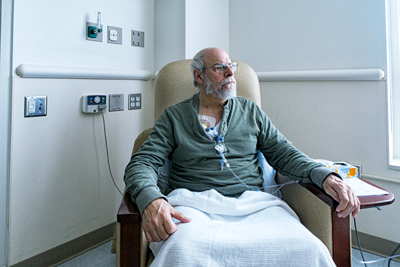
Chemotherapy for pancreatic cancer
This page is about chemotherapy for cancer of the pancreas. You can find information about
Chemotherapy for pancreatic cancer
Chemotherapy uses anti cancer or ‘cytotoxic’ drugs to destroy cancer cells. You may have chemotherapy after pancreatic surgery. If the cancer was totally removed the chemotherapy can lower the risk of cancer coming back in the future. If it wasn't possible to remove all the cancer, chemotherapy may help to shrink what was left behind.
Doctors are also looking into chemotherapy before you have surgery (known as neo adjuvant chemotherapy). The idea is that the chemotherapy shrinks the cancer so that you need less surgery and there is more chance of completely removing the cancer.
You may have chemotherapy combined with radiotherapy if you have stage 1, 2 or 3 pancreatic cancer. If you have this treatment, it will usually be part of a clinical trial.
If you have symptoms of advanced pancreatic cancer, your doctor may suggest chemotherapy. It might shrink your cancer and help to relieve some of the symptoms. Chemotherapy may help to slow down the cancer growth for a while. But it doesn’t help everyone with pancreatic cancer.
You can view and print the quick guides for all the pages in the treating pancreatic cancer section.
You may have chemotherapy after surgery for pancreatic cancer. If your surgeon could completely remove your cancer, you may have chemotherapy to help lower the risk of the cancer coming back in the future (known as adjuvant chemotherapy). If it wasn't possible to remove all the cancer, the chemotherapy may help to shrink what was left behind.
A trial called ESPAC-1 showed that chemotherapy with the drug fluorouracil (5-FU) after surgery can help to reduce the risk of the cancer coming back, or at least delay it. Another trial, ESPAC-3, compared giving 5-FU with gemcitabine after surgery. They worked equally well. As gemcitabine generally has fewer side effects than 5-FU doctors are increasingly using this drug.
A trial running at the moment, called ESPAC-4, is comparing gemcitabine on its own with gemcitabine and capecitabine (GemCap), after surgery. Capecitabine is a type of fluorouracil that you take as a tablet. Doctors want to know if the combination of chemotherapy drugs works better than having gemcitabine on its own.
Doctors are also looking into chemotherapy before you have surgery (neo adjuvant chemotherapy). The idea is that the chemotherapy shrinks the cancer so that
- You need less surgery
- There is more chance of completely removing the cancer
Results from randomised clinical trials are needed before doctors can see whether this approach improves the outlook for people with cancer of the pancreas.
You can find out about trials for cancer of the pancreas on our clinical trials database. Choose 'pancreatic' from the drop down menu.
You may have combination radiotherapy and chemotherapy if you have stage 1, 2 or 3 pancreatic cancer. If you have this treatment, it will probably be part of a clinical trial. This is because there is some evidence that combining these treatments can help. But doctors don't know enough about the best way to give the treatments and who is most likely to benefit.
Some doctors have looked into using these treatments before surgery if the cancer cannot be removed. The idea is to shrink the cancer so that it can be taken out. There has been some success reported, but only a few patients having this type of treatment were able to have surgery and the cancer did come back. There are also a lot of side effects for combined treatment. This is still early research.
There has been some research looking into combined chemotherapy and radiotherapy after surgery has completely removed pancreatic cancer. Again, this is to lower the risk of the cancer coming back. The ESPAC 1 trial showed chemotherapy after surgery was the best approach. There was no benefit from radiotherapy after surgery, or from combined chemotherapy and radiotherapy after surgery.
If you have symptoms from advanced pancreatic cancer, your doctor may suggest chemotherapy. The chemotherapy won't cure the cancer but it might shrink your cancer and so help to relieve some of the symptoms. It may help to slow down the growth of the cancer for a while. But chemotherapy doesn't help everyone with pancreatic cancer. Some people will feel better. And some people may live longer. But some won't get much benefit from the treatment.
You need to consider whether the trips to hospital and side effects are worth the possible benefit for you. You can always discuss this with your specialist. We can't tell exactly how you will be affected by side effects until you have the treatment. You can start and see how it goes if you like. You can always stop the treatment if you want to.
The National Institute of Health and Clinical Excellence (NICE) have recommended the chemotherapy drug gemcitabine as a first treatment for people with advanced pancreatic cancer. However they do not recommend this for anyone who is so ill they need considerable help with day to day care. They think the side effects of treatment may outweigh the possible benefits in this situation.
If you are well enough, you may be offered gemcitabine combined with capecitabine (GemCap).
Your doctor may ask you to take part in a clinical trial testing chemotherapy. This is because new drugs and new combinations of current drugs are being tested all the time and it is important to find out which treatments work best.
The drugs used most often for pancreatic cancer are
Fluorouracil (5-FU)
Fluorouracil is a liquid that you have through a drip into a vein. When you are having fluorouracil, you usually have a vitamin called folinic acid as well, because this helps to make it work better. The links below take you to information about coping with side effects. The most common side effects are
Capecitabine
Capecitabine is a tablet form of fluorouracil. It is also called Xeloda. The side effects of capecitabine are generally the same as for fluorouracil.
Gemcitabine (Gemzar)
Gemcitabine is a liquid that you have through a drip into a vein. The links below take you to information about coping with side effects. The most common side effects are
- Feeling or being sick
- Swelling of the feet or legs or weight gain due to fluid retention
- Flu like symptoms such as aching, headaches, chills and a raised temperature
- Increased risk of infection
Usually the side effects with gemcitabine are relatively mild. Gemcitabine is sometimes combined with capecitabine as GemCap. There is more about the particular side effects of gemcitabine, capecitabine, fluorouracil, and GemCap in the cancer drugs section of CancerHelp UK.
We don't yet know much scientifically about how some nutritional or herbal supplements may interact with chemotherapy. Some could be harmful. It is very important to let your doctors know if you take any supplements. Or if you are prescribed them by alternative or complementary therapy practitioners.
Talk to your specialist about any other tablets or medicines you take while you are having active treatment. There is information about the safety of herbal, vitamin and diet supplements in the complementary therapies section of CancerHelp UK.
Some studies seem to suggest that fish oil preparations may reduce the effectiveness of chemotherapy drugs. If you are taking or thinking of taking these supplements talk to your doctor to find out whether they could affect your treatment.
For more about chemotherapy generally, look at the main chemotherapy section in CancerHelp UK. It explains the treatment in more detail including
If you would like more information about chemotherapy, contact our cancer information nurses. They would be happy to help.
There is also a page on pancreatic cancer research in this section of CancerHelp UK.